Best standing desk for small apartments: converter, single motor, or nothing
We may earn a commission if you buy through these links — at no cost to you.
Standing desk converter
Sits on an existing desk, raises the keyboard and screen, no extra footprint
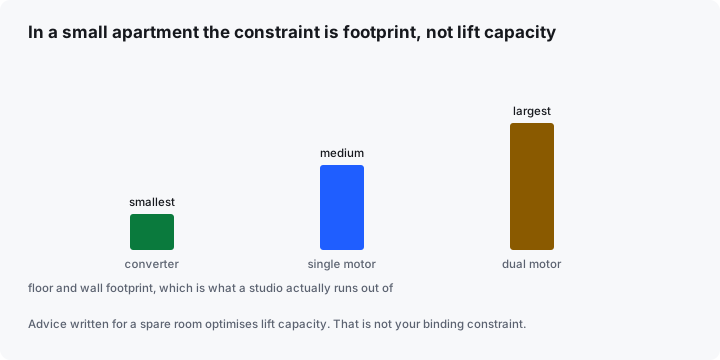
In a small apartment the constraint is footprint, not lift capacity, and that flips the format: a converter reuses the desk you already own and adds no floor area, where even a small standing desk adds a second footprint. Check that the raised height puts the screen at eye level before you commit.
Check the current price on Amazon ›Short answer: in a small apartment the binding constraint is footprint, not lift capacity, and that flips which format is right.
| Desktop converter | Single-motor frame | Dual-motor frame | |
|---|---|---|---|
| Cost | Lowest | Mid | Highest |
| Floor area | Zero extra (sits on your desk) | Needs desk space | Needs desk space |
| Install | None | Assemble the frame | Assemble the frame |
| Best for | Reach, often pushes the monitor too close in a shallow room | Quiet, cheap, fine in small sizes | Wide tops, heavy monitor arms, fastest travel |
| Overkill when | - | - | 100-120 cm top in a normal small room |
| Fits if you | Want the cheapest lift and have desk depth | Want a real standing desk quietly, on a budget | Need to carry heavy gear or very wide tops |
In a studio or bedroom corner the answer is usually the single motor, not the dual: for the small sizes common in apartments the stability gap is much less than the marketing claims, and the dual only earns its price on wide tops or heavy monitor arms. Choose the converter if the desk you already own has the depth and you want the cheapest lift. Choose the single motor if you want a real standing desk without the noise or the price. Skip the dual unless you genuinely carry the wide top or the monitor arms. Also skip both if raising the desk puts you standing in a walkway or a doorway.
Three formats, honestly
A desktop converter sits on the desk you already own and lifts the working surface. Cheapest, needs no disassembly, and takes zero extra floor area. The cost is depth: converters push the monitor toward you when raised, and in a shallow room that can put the screen too close.
A single-motor electric frame is quieter and cheaper than a dual, and in the small sizes common in apartments the stability difference is much less than the marketing suggests.
A dual-motor frame earns its price on wide tops, heavy monitor arms, and anyone who wants the fastest, most level travel. In a 100 to 120 cm top it is frequently overkill.
Measure the height range against your body, not the spec
The published range assumes a bare frame. Add the top’s thickness, then subtract for a thick carpet or a monitor riser. The number that matters is elbow height at roughly 90 degrees, and for shorter users the common failure is a minimum sitting height that is too tall, not a maximum that is too short. Check the low end of the range as carefully as the high end.
The apartment-specific checks
- Noise. A motor that is fine in a house is loud through a shared wall at 7am. Look for a quoted decibel figure, and treat its absence as a signal.
- Wall clearance and cable slack. A desk that rises pulls its cables. Leave slack or the desk unplugs your monitor on the way up, and route cables so nothing catches behind it.
- Footprint when raised is unchanged, but reach is not. Standing pushes you back from the desk. Check you are not standing in a doorway or a walkway.
- Floor levelling. Old apartment floors are rarely level, and an unlevel frame wobbles at full extension in a way it never does when lowered.
What is worth paying for, and what is not
Worth it: a longer warranty on the frame’s electronics, which is the part that fails; a top deep enough for your monitor’s minimum viewing distance.
Not worth it: memory-preset keypads if you use two heights, programmable reminders that a phone already does, and marketing capacity figures far beyond anything you will place on it.
The order, one line
Format for your floor area, then elbow height against the real range, then noise, then cable slack, then the frame warranty.
Common questions
Which standing desk format fits a small apartment?
Footprint is the binding constraint rather than lift capacity, and that flips the usual answer. A converter on an existing desk often beats a full frame that cannot physically go anywhere.
Is a single motor enough?
For a small top and a normal load, usually yes. Dual motors buy speed and stability on wide tops, which is a size question rather than a quality one.
How do I check the height range fits me?
Measure against your body rather than the specification sheet. Elbow height while seated and while standing are the two numbers the range has to contain.
Which one is for you
The format is decided by your floor area first, then by whether the desk you already own is deep enough:
- Deep desk already in place, shallow room, cheapest lift: the converter. It sits on the desk you own, adds zero extra floor area, and is the lowest-cost format. Its cost is depth, because it pushes the monitor toward you when raised, so check it does not put the screen too close: standing desk converter .
- You want a real standing desk, quietly, on a budget: the single motor. For the small tops common in apartments the stability gap against a dual is much less than the marketing claims. Check the low end of its height range against your seated elbow height: single motor standing desk .
- Wide top or heavy monitor arms: the dual motor, and only then, because in a 100 to 120 cm top it is frequently overkill.
- Standing on a hard floor: add the mat. It is the cheapest part of the setup and the reason most standing desks stop being used: anti fatigue standing desk mat .
- First time the desk goes up: the cable tray. A desk that rises pulls its cables, and without slack it unplugs your monitor on the way up: standing desk cable management tray .
- Skip all of them if raising the desk puts you standing in a walkway or a doorway, or if the desk you own is too shallow to keep the screen at eye level.
Where to look on Amazon
These are searches, not picks. We do not quote prices or specifications here: Amazon’s terms allow those only where Amazon itself serves the data, and a hard-coded number is wrong the week after it is written. Compare the listings against the order above.
- standing desk converter , the format that keeps your existing desk and the smallest footprint
- single motor standing desk , the full-desk route, where the height range has to be checked against your elbow height
- standing desk cable management tray , cable slack, which is the failure that appears the first time the desk goes up
- anti fatigue standing desk mat , standing on a hard floor is why most standing desks stop being used, and this is the cheapest part of the setup
Built from manufacturer documentation and published ergonomics guidance. We do not claim hands-on testing we have not done.