Best cold plunge tub for home: the chiller is the product
We may earn a commission if you buy through these links — at no cost to you.
Active Aqua Water Chiller
0.10 HP, 10–40 gal, digital temperature control
This guide's argument is that the chiller is the product and the tub is a bucket, so the pick belongs here and not on the tub. Compare pull-down time and hold temperature — those two numbers decide whether the ritual survives the third month. The chiller-compatible tub above only makes sense if you already own one.
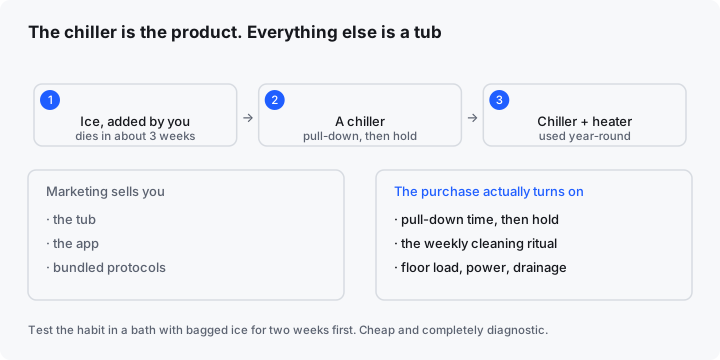
Check the current price on Amazon ›Short answer: the chiller is the product. Everything else is a tub, and the cleaning ritual decides whether you still use it in three months.
How the water gets cold
Ice, added by you. The cheapest entry and the reason most home plunges are abandoned. Buying or making ice daily is a chore that survives about three weeks of enthusiasm.
A chiller unit. This is the actual product. It determines the lowest temperature reached, how long it takes to get there, whether it holds temperature while you sit in it, and what it adds to the electricity bill. A chiller’s pull-down time on a full tub is the specification to compare, and a unit that reaches the temperature but recovers slowly is unpleasant for a second user.
A chiller with a heater turns the same tub into a warm soak in winter, which is the single feature most likely to keep the thing in use year-round.
How it stays clean
Cold water is not self-cleaning. Options are filtration, usually a cartridge to change on a schedule; ozone or UV sanitation, which reduces but does not eliminate chemical use; and draining and refilling, which is honest, wasteful and time-consuming.
Ask what the weekly ritual is before buying. The answer is the difference between a plunge that is used and one that is covered with a lid all summer.
Where it lives
- Outdoors is easier for drainage and spills and harder for freezing climates, where the plumbing and the chiller both need a plan.
- Indoors needs a floor that can carry the filled weight, which is substantial, and a drainage route that is not a bucket.
- Access to power near the tub, on a circuit that can carry the chiller.
What we would not pay for
App connectivity that sets a temperature a dial already sets. Aesthetic cladding on a unit that lives on a patio. Bundled programmes and protocols, which are content, not equipment.
Before buying anything
Do it in a bath with bagged ice for two weeks. It is unpleasant, cheap and completely diagnostic: it tells you whether the habit exists before several thousand dollars does.
Anyone with a cardiovascular condition, high blood pressure or a history of fainting should speak to a doctor first. Never plunge alone if you are new to it. Nothing here is medical advice.
The order, one line
Real habit evidence first, then the chiller’s pull-down and hold, then the cleaning ritual, then the location’s floor, power and drainage.
Common questions
Do I need a chiller, or is ice enough?
Ice works and it is how most people start. The chiller is what turns it into something you still use in three months, because the daily ice run is the step people quietly stop doing.
How cold does the water actually need to be?
Cold enough to be genuinely uncomfortable for the time you sit in it. Chasing a specific number matters less than being able to repeat the session without dreading the setup.
What is the maintenance actually like?
Filtration and sanitising decide it. A tub that needs draining and refilling by hand every few days becomes a storage container, which is why the cleaning path deserves as much attention as the cooling one.
Where to look on Amazon
These are searches, not picks. We do not quote prices or specifications here: Amazon’s terms allow those only where Amazon itself serves the data, and a hard-coded number is wrong the week after it is written. Compare the listings against the order above.
- cold plunge tub compatible with a chiller , the tub half of the integrated route — the chiller is bought separately, so the pull-down time and hold temperature of the chiller you add are the specification to compare
- water chiller for cold plunge , the separates route, if you already have a tub and only the cooling is missing
- cold plunge cover and filter , the cleaning ritual, which is what decides whether the plunge is still in use in three months
- floating pool thermometer , you cannot manage the temperature the guide is about without measuring it, and this is the cheapest instrument in the setup
Built from manufacturer documentation. We do not claim hands-on testing we have not done.